Fasttasks 2 47 – The Troubleshooting Appendix
Screenshot for FastTasks 2 Bad Link Rating: 4 (3 votes) At-a-glance display of key system info, quickly toggle hidden files, free memory, remove login items and create a super-fast RAM disk – just some of more than a dozen tasks that FastTasks accomplishes for you with little more than a. Appendix = Appendix (if only 1 appendix). If there is more than 1 appendix, add a letter after 'Appendix.' (e.g., Appendix A, Appendix B, etc.) More information. For more information about the organization of the pages or sections of an APA paper or section labels, see Section 2.17 on page 43 and Section 2.28 on pages 49 of the APA Manual, 7th. Appendix D: Example Problems Table of Contents Example Problem Date Issued Subject 1 04/2020 Clearances at Falsework Openings 2 04/2020 Falsework Beam – Bi-Axial Bending – Canted ≤ 2% 3 04/2020 Falsework Beam – Bi-Axial Bending – Canted 2% 4 04/2020 Wind Loads on Conventional Falsework. APPENDIX D, EXAMPLE PROBLEMS APRIL 2020 CALTRANS FALSEWORK MANUAL D-TOC- 2 Example Problem Date Issued Subject Timber Pile Bents – Type I Bent Timber Pile Bents – Type II Bent Timber Pile Bents – Type III Bent.
- Fasttasks 2 47 – The Troubleshooting Appendix Bursts
- Fasttasks 2 47 – The Troubleshooting Appendix Diagram
You are here: Sqwarq Apps > FastTasks 2
This slideshow requires JavaScript.
FT2 is a troubleshooting utility that provides a number of useful functions, including at-a-glance display of key system info, fast toggle of invisible files, free memory, remove login items and scan for troublesome apps and files.
System Requirements:
- Supported on OS X 10.10.5 to macOS 10.13 (for 10.14+, try our app DetectX Swift)
- FastTasks 2 currently requires the system language to be Dutch, English or Thai. Some features may not work in other languages.
- Please remember to allow FastTasks 2 access to Accessibility features in System Preferences > Security & Privacy > Privacy Accessibility.
What’s new
Version 2.53
(Update: 16 Apr 2019 13:56 ICT)
Links:
Download FastTasks 2
Documentation and Help Centre
FastTasks – About
Take the 60-second tour:
More OS X apps from Sqwarq:
DetectX – detect and remove 3rd-party software problems.
Follow @sqwarq on Twitter
@sqwarq
The total number of calories a person needs each day varies depending on a number of factors, including the person’s age, sex, height, weight, and level of physical activity. In addition, a need to lose, maintain, or gain weight and other factors affect how many calories should be consumed. Estimated amounts of calories needed to maintain calorie balance for various age and sex groups at three different levels of physical activity are provided in Table A2-1. These estimates are based on the Estimated Energy Requirements (EER) equations, using reference heights (average) and reference weights (healthy) for each age-sex group. For children and adolescents, reference height and weight vary. For adults, the reference man is 5 feet 10 inches tall and weighs 154 pounds. The reference woman is 5 feet 4 inches tall and weighs 126 pounds.
Estimates range from 1,600 to 2,400 calories per day for adult women and 2,000 to 3,000 calories per day for adult men. Within each age and sex category, the low end of the range is for sedentary individuals; the high end of the range is for active individuals. Due to reductions in basal metabolic rate that occur with aging, calorie needs generally decrease for adults as they age. Estimated needs for young children range from 1,000 to 2,000 calories per day, and the range for older children and adolescents varies substantially from 1,400 to 3,200 calories per day, with boys generally having higher calorie needs than girls. These are only estimates, and approximations of individual calorie needs can be aided with online tools such as those available at www.supertracker.usda.gov.
Table A2-1. Estimated Calorie Needs per Day, by Age, Sex, and Physical Activity Level
| AGE | Sedentary[a] | Moderately active[b] | Active[c] |
|---|---|---|---|
| 2 | 1,000 | 1,000 | 1,000 |
| 3 | 1,000 | 1,400 | 1,400 |
| 4 | 1,200 | 1,400 | 1,600 |
| 5 | 1,200 | 1,400 | 1,600 |
| 6 | 1,400 | 1,600 | 1,800 |
| 7 | 1,400 | 1,600 | 1,800 |
| 8 | 1,400 | 1,600 | 2,000 |
| 9 | 1,600 | 1,800 | 2,000 |
| 10 | 1,600 | 1,800 | 2,200 |
| 11 | 1,800 | 2,000 | 2,200 |
| 12 | 1,800 | 2,200 | 2,400 |
| 13 | 2,000 | 2,200 | 2,600 |
| 14 | 2,000 | 2,400 | 2,800 |
| 15 | 2,200 | 2,600 | 3,000 |
| 16 | 2,400 | 2,800 | 3,200 |
| 17 | 2,400 | 2,800 | 3,200 |
| 18 | 2,400 | 2,800 | 3,200 |
| 19-20 | 2,600 | 2,800 | 3,000 |
| 21-25 | 2,400 | 2,800 | 3,000 |
| 26-30 | 2,400 | 2,600 | 3,000 |
| 31-35 | 2,400 | 2,600 | 3,000 |
| 36-40 | 2,400 | 2,600 | 2,800 |
| 41-45 | 2,200 | 2,600 | 2,800 |
| 46-50 | 2,200 | 2,400 | 2,800 |
| 51-55 | 2,200 | 2,400 | 2,800 |
| 56-60 | 2,200 | 2,400 | 2,600 |
| 61-65 | 2,000 | 2,400 | 2,600 |
| 66-70 | 2,000 | 2,200 | 2,600 |
| 71-75 | 2,000 | 2,200 | 2,600 |
| 76 and up | 2,000 | 2,200 | 2,400 |
| AGE | Sedentary[a] | Moderately active[b] | Active[c] |
|---|---|---|---|
| 2 | 1,000 | 1,000 | 1,000 |
| 3 | 1,000 | 1,200 | 1,400 |
| 4 | 1,200 | 1,400 | 1,400 |
| 5 | 1,200 | 1,400 | 1,600 |
| 6 | 1,200 | 1,400 | 1,600 |
| 7 | 1,200 | 1,600 | 1,800 |
| 8 | 1,400 | 1,600 | 1,800 |
| 9 | 1,400 | 1,600 | 1,800 |
| 10 | 1,400 | 1,800 | 2,000 |
| 11 | 1,600 | 1,800 | 2,000 |
| 12 | 1,600 | 2,000 | 2,200 |
| 13 | 1,600 | 2,000 | 2,200 |
| 14 | 1,800 | 2,000 | 2,400 |
| 15 | 1,800 | 2,000 | 2,400 |
| 16 | 1,800 | 2,000 | 2,400 |
| 17 | 1,800 | 2,000 | 2,400 |
| 18 | 1,800 | 2,000 | 2,400 |
| 19-20 | 2,000 | 2,200 | 2,400 |
| 21-25 | 2,000 | 2,200 | 2,400 |
| 26-30 | 1,800 | 2,000 | 2,400 |
| 31-35 | 1,800 | 2,000 | 2,200 |
| 36-40 | 1,800 | 2,000 | 2,200 |
| 41-45 | 1,800 | 2,000 | 2,200 |
| 46-50 | 1,800 | 2,000 | 2,200 |
| 51-55 | 1,600 | 1,800 | 2,200 |
| 56-60 | 1,600 | 1,800 | 2,200 |
| 61-65 | 1,600 | 1,800 | 2,000 |
| 66-70 | 1,600 | 1,800 | 2,000 |
| 71-75 | 1,600 | 1,800 | 2,000 |
| 76 and up | 1,600 | 1,800 | 2,000 |
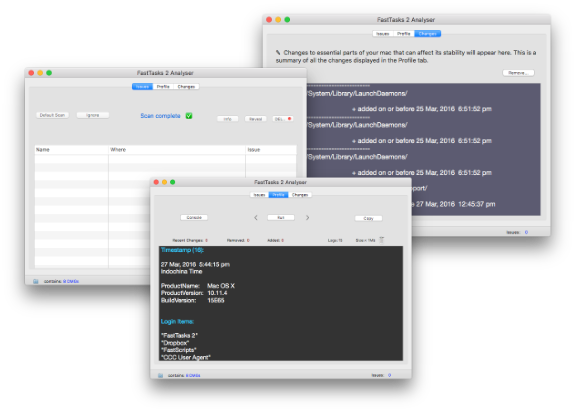
Fasttasks 2 47 – The Troubleshooting Appendix Bursts
Notes
Fasttasks 2 47 – The Troubleshooting Appendix Diagram
[a] Sedentary means a lifestyle that includes only the physical activity of independent living.
[b] Moderately Active means a lifestyle that includes physical activity equivalent to walking about 1.5 to 3 miles per day at 3 to 4 miles per hour, in addition to the activities of independent living.
[c] Active means a lifestyle that includes physical activity equivalent to walking more than 3 miles per day at 3 to 4 miles per hour, in addition to the activities of independent living.
[d] Estimates for females do not include women who are pregnant or breastfeeding.
Source: Institute of Medicine. Dietary Reference Intakes for Energy, Carbohydrate, Fiber, Fat, Fatty Acids, Cholesterol, Protein, and Amino Acids. Washington (DC): The National Academies Press; 2002.